
Safe, Precise Tooth Removal. Patient-Centred Care.
Safe, Precise Tooth Removal With Patient-Centred Care
Tooth extraction may be recommended when a tooth is severely damaged, infected, impacted or cannot be restored effectively with other dental treatments.
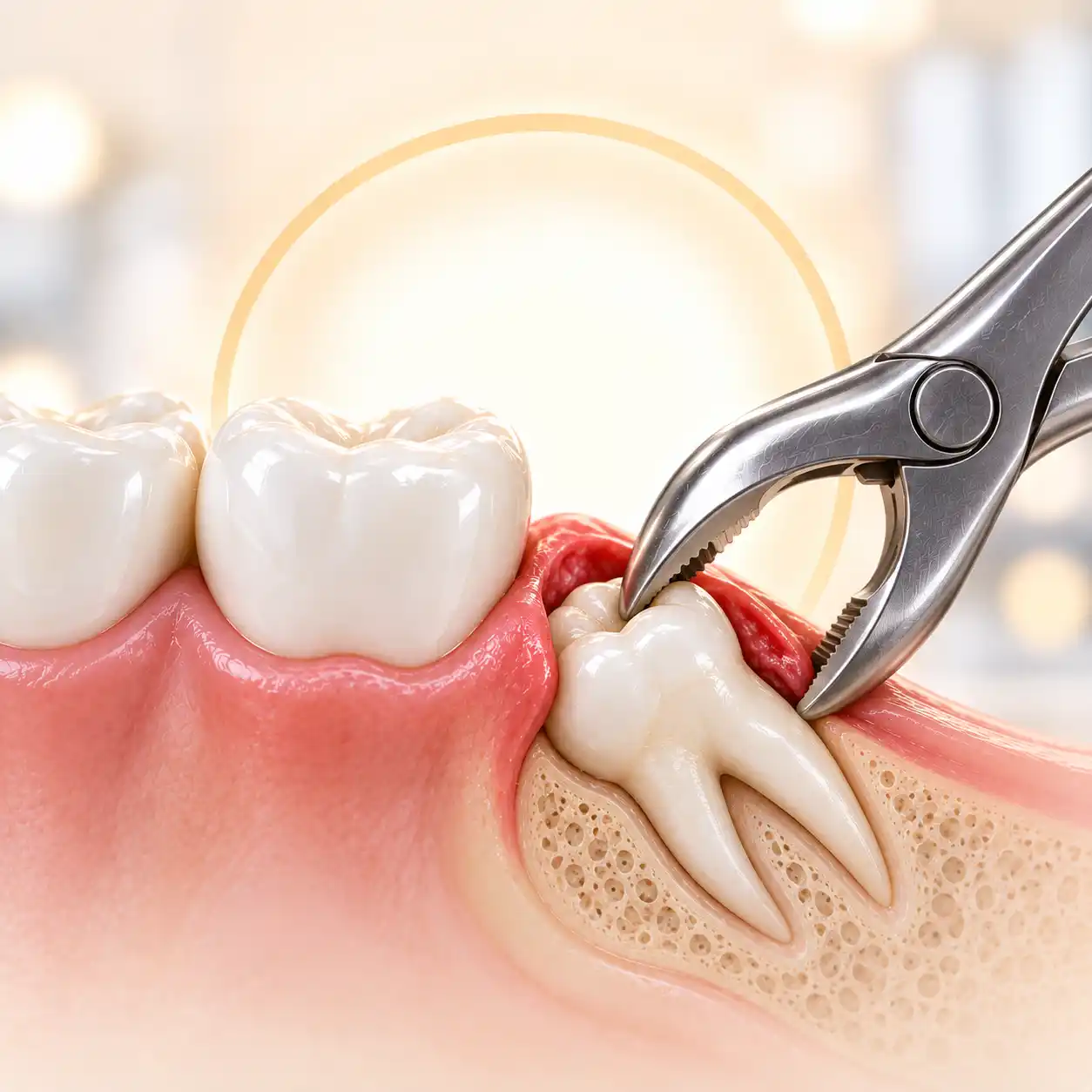
Wisdom tooth removal is one of the most common types of tooth extraction. Wisdom teeth may become impacted, grow at an unusual angle or create problems for the surrounding teeth and gums.
At Dr. KP's Confidenz Advanced Dental Care, tooth removal is planned after a detailed clinical examination and appropriate diagnostic imaging. Our focus is on accurate diagnosis, minimally traumatic treatment where appropriate, patient comfort and clear after-care guidance.
What Is Tooth Extraction?
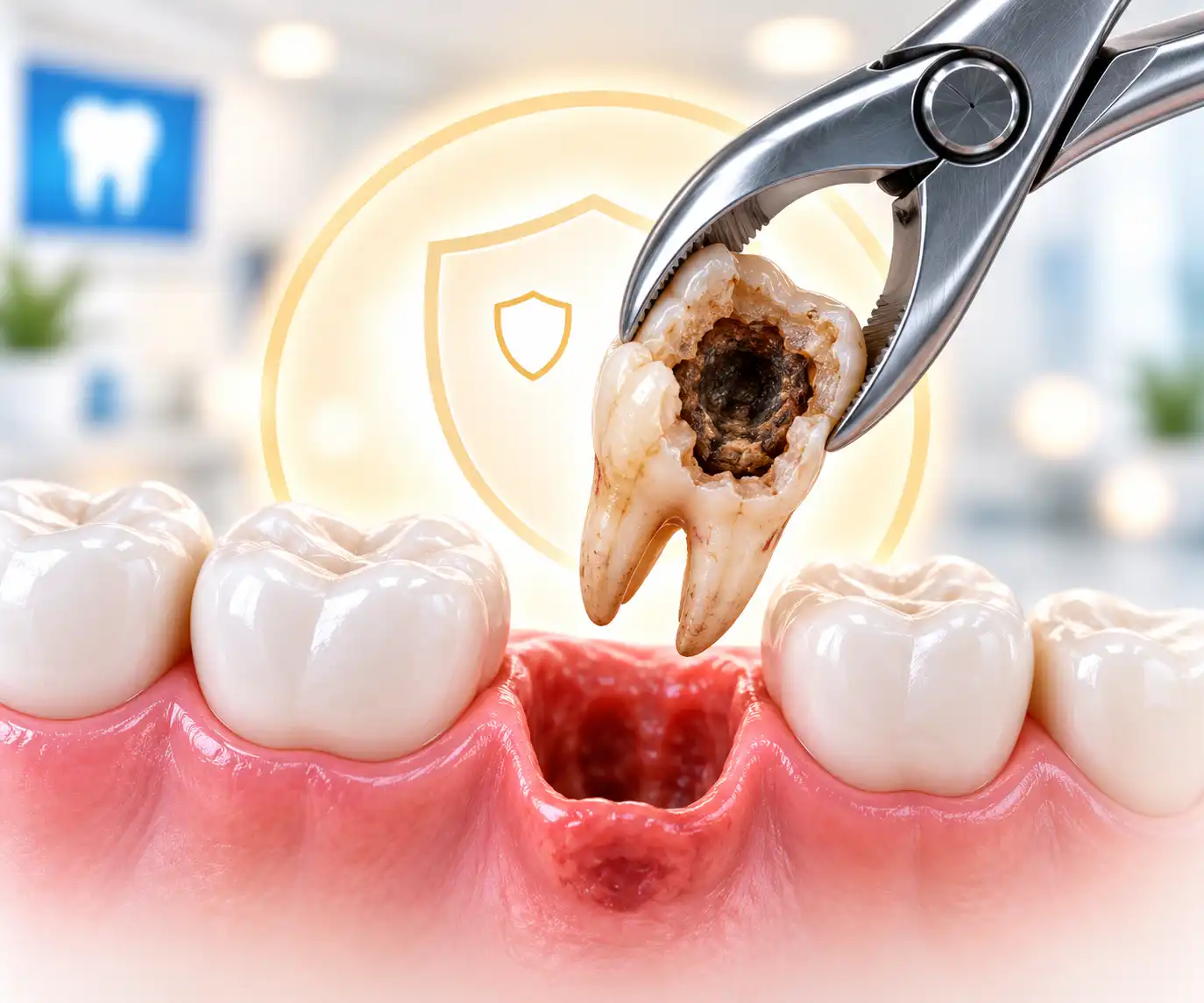
Tooth extraction is a dental procedure in which a tooth is carefully removed from its position in the jaw.
Although preserving a natural tooth is generally preferred whenever it can be predictably restored, extraction may sometimes be the appropriate treatment when a tooth is severely damaged, infected, impacted or otherwise unsuitable for restoration.
Tooth extraction can involve:
- Simple extraction – usually performed when the tooth is visible and accessible in the mouth.
- Surgical extraction – may be required when a tooth is impacted, broken below the gum line or difficult to access.
The type of extraction depends on the condition, root anatomy and position of the tooth.
What Is Wisdom Tooth Removal?
Wisdom teeth are the third molars located at the back of the mouth. They commonly develop during the late teenage years or early adulthood, although their timing varies between individuals.
Some wisdom teeth grow normally and do not cause problems. Others may not have enough space to erupt properly and can become impacted.
Wisdom tooth removal involves carefully removing a problematic wisdom tooth when examination indicates that extraction is appropriate.
Why Do Wisdom Teeth Become Problematic?
Wisdom teeth can create complications when there is insufficient jaw space for them to emerge properly. A wisdom tooth may:
- Remain trapped beneath the gum
- Grow at an awkward or horizontal angle
- Push directly against a neighbouring molar
- Erupt only partially, creating a gum flap
- Become difficult to clean with routine brushing
- Collect trapped food and bacteria, causing decay
- Cause pericoronitis (gum inflammation) or cysts
Why Do Teeth Need to Be Extracted?
A tooth may require extraction for several clinical reasons when conservative treatments cannot predictably save it.
Severe Tooth Decay
When decay has extensively damaged the tooth structure and it cannot be predictably restored with a filling or crown, extraction may be considered.
Advanced Infection
A severely infected tooth may require removal when endodontic (root canal) or other treatments are unsuitable or unlikely to preserve the tooth.
Broken or Fractured Tooth
A tooth with extensive structural fracture extending beneath the gum or into the root may not always be repairable.
Severe Gum Disease
Advanced periodontal disease can cause substantial loss of supporting jawbone, resulting in significant mobility of the tooth.
Impacted Wisdom Tooth
A wisdom tooth may remain partially or completely trapped beneath the gum or bone, risking infection, crowding or damage to nearby molars.
Orthodontic Treatment
In selected cases, selective tooth removal may be recommended as part of an orthodontic plan to relieve severe crowding and align the bite.
Signs You May Need Tooth Extraction or Wisdom Tooth Removal
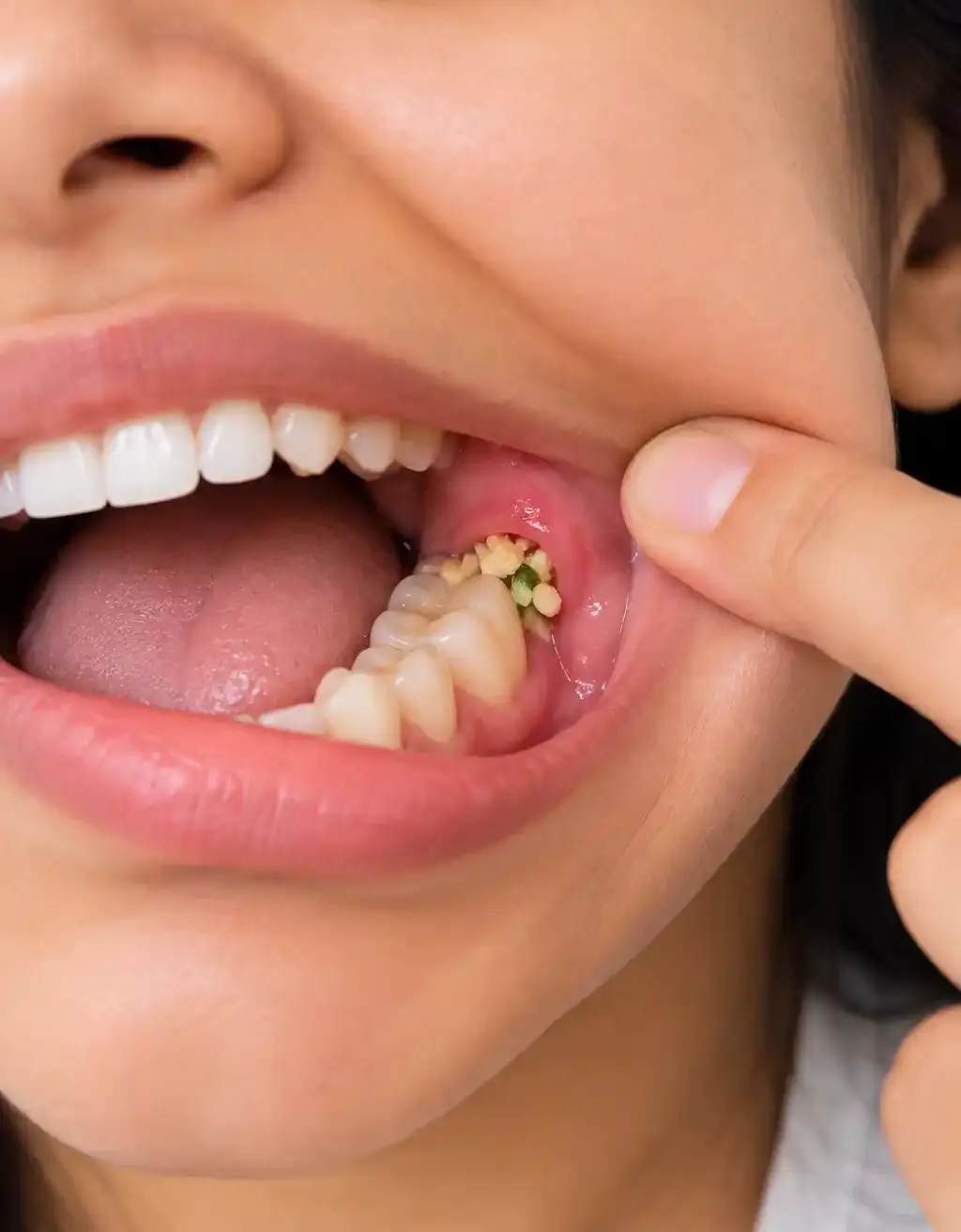
You should consider a professional dental evaluation if you experience any of the following symptoms:
Throbbing or constant pain
Extensively broken tooth
Gum puffiness or abscess
Discomfort on bite pressure
Around back wisdom tooth
Radiating ear or neck ache
Trismus or jaw stiffness
Repeatedly under gum flap
Fractured below gumline
Unpleasant discharge or smell
Before Tooth Extraction
A thorough diagnostic evaluation is essential before proceeding with any tooth extraction.
Clinical Examination
The dentist examines the affected tooth, gum tissue and surrounding oral structures thoroughly.
Dental X-Ray & Imaging
An X-ray is taken to assess root curvature, bone levels and the relationship of wisdom teeth with nearby nerves and anatomical structures.
Medical & Dental History
Relevant medical conditions, medications (such as blood thinners), allergies and past dental history are carefully reviewed.
Treatment Planning
The dentist determines whether extraction is appropriate or whether the tooth can be preserved through other restorative treatments.
How Is Tooth Extraction Performed?
The exact procedure depends on whether it is a simple or surgical extraction, planned carefully for maximum patient comfort.
Examination & Planning
The tooth is assessed clinically and through diagnostic imaging to determine the exact approach.
Local Anaesthesia
Local anaesthesia is administered to thoroughly numb the treatment area and ensure you remain comfortable throughout.
Tooth Loosening
The dentist carefully and gently loosens the tooth from its supporting periodontal ligament fibers using precision instruments.
Tooth Removal
Once sufficiently loosened, the tooth is carefully and smoothly removed with minimal trauma to surrounding tissues.
Surgical Extraction (When Required)
For impacted or difficult teeth, a small gum incision is made. The tooth may be divided into sections for gentle, controlled removal.
Cleaning the Area
The extraction socket is carefully inspected, flushed, and cleaned to remove any residual infection or debris.
Sutures (When Required)
If required, the gum tissue is gently closed with dental sutures to protect the blood clot and facilitate proper healing.
After-Care Instructions
You will receive clear guidance on gauze placement, bleeding control, soft foods, hygiene, and any prescribed medications.
Is Tooth Extraction Painful?
Tooth extraction is generally performed under local anaesthesia, so the treatment area is completely numb during the procedure. You may feel:
- Firm pressure as the tooth is loosened
- Movement or gentle pushing sensations
- Vibration from dental instruments
- Temporary numbness for a few hours after treatment
What to Expect After Wisdom Tooth Removal
Recovery varies depending on whether the wisdom tooth was removed through a simple or surgical extraction. You may experience:
- Mild to moderate swelling around the cheek or jaw
- Soreness and tenderness around the extraction site
- Temporary difficulty opening the mouth wide
- Mild oozing or pink saliva during the first 24 hours
- Sensitivity while chewing or drinking
After-Care Following Tooth Extraction
Proper after-care supports normal healing, protects the blood clot and helps reduce avoidable complications such as dry socket.
Protect the Extraction Site
Bite gently on the gauze pad provided by your dentist for the recommended time to control bleeding and allow a stable clot to form.
Avoid Smoking & Straws
Smoking and suction from straws can dislodge the blood clot, interfering with healing and significantly increasing the risk of painful dry socket.
Choose Suitable Foods
Stick to soft, cool or lukewarm foods (smoothies, yoghurt, khichdi) during initial recovery. Avoid hard, crunchy or spicy foods.
Avoid Disturbing the Area
Avoid touching the extraction site with your tongue, fingers or toothpicks. Do not rinse vigorously during the first 24 hours.
Maintain Oral Hygiene
Continue brushing your remaining teeth carefully. After 24 hours, gentle warm salt-water rinses can help keep the area clean.
Follow Medication Instructions
If pain relievers or antibiotics are prescribed, take them exactly as directed by your dentist to maintain comfort and prevent infection.
Avoid Strenuous Activity
Rest and avoid heavy lifting, vigorous exercise or strenuous physical work for at least 24–48 hours to minimize bleeding and swelling.
How Long Does Tooth Extraction Take?
The duration depends on the tooth and the complexity of the procedure.
A straightforward extraction of an accessible tooth may be relatively quick, often completed in 20 to 40 minutes.
An impacted or surgically complex wisdom tooth can require more time for careful bone removal, sectioning and suturing.
Your dentist will provide an accurate estimate after examining the tooth and reviewing the required radiographic imaging.
When Can You Return to Normal Activities?
Many patients can return to routine desk work and light activities within 1 to 2 days after a simple extraction. Wisdom tooth surgery may require several days of recovery depending on:
- Type of extraction — simple vs surgical removal
- Position and depth of the impacted tooth
- Complexity of the surgical procedure
- Number of teeth removed in one appointment
- Individual healing response and immune health
- Adherence to your dentist's post-operative instructions
Benefits of Tooth Extraction When Clinically Indicated
When extraction is the appropriate treatment, it provides essential benefits for your oral health and overall well-being.
Eliminates a non-restorable tooth that may otherwise harbor bacteria and cause chronic pain.
Resolves persistent abscesses and prevents dental infections from spreading to the jaw or bloodstream.
Alleviates recurrent gum swelling, jaw stiffness and deep chewing discomfort caused by impaction.
Prevents an angled or impacted tooth from eroding the roots of adjacent second molars.
Enables effective alignment and relief of severe crowding as part of a comprehensive orthodontic plan.
Paves the way for healthy replacement solutions like dental implants, bridges or dentures.
Why Choose Dr. KP's Confidenz for Tooth Extraction?
Careful Diagnosis Before Tooth Removal: Extraction is not recommended simply because a tooth is damaged. We first evaluate whether the tooth can be preserved through appropriate restorative or endodontic treatment.
Detailed Treatment Planning: Clinical examination and high-resolution imaging help us understand the tooth's anatomy and position before treatment begins.
Focus on Patient Comfort: Effective local anaesthesia and gentle surgical techniques are employed to make the procedure as comfortable and anxiety-free as reasonably possible.
Careful Approach to Wisdom Teeth: Impacted and difficult-to-access wisdom teeth receive meticulous anatomical evaluation because of their proximity to the inferior alveolar nerve, sinus cavities and adjacent teeth.
Clear After-Care Guidance: You receive comprehensive post-operative instructions to support smooth healing and prevent complications.

Why You Can Trust Your Dental Care With Us
Care Backed by More Than a Decade of Clinical Experience
Dr. Krishna Priya Chukkapalli brings 10+ years of clinical experience to patient evaluation, treatment planning and gentle dental care in Hyderabad.
Treatment Guided by Clinical Knowledge & Modern Dentistry
Tooth extraction and wisdom tooth removal are planned based on rigorous clinical findings, diagnostic imaging and each patient's unique oral anatomy.
Trusted by 256+ Patients Who Have Shared Their Experience
Our practice has received 256+ Google Reviews, reflecting genuine experiences shared by patients and families who trust our surgical and restorative care.
Honest Recommendations With Your Oral Health First
We explain whether extraction is truly necessary and openly discuss appropriate alternatives whenever preserving the natural tooth may be possible.
Medical Disclaimer: The information provided on this page is intended for general educational purposes and should not be considered a substitute for professional dental diagnosis or treatment. Not every damaged or painful tooth requires extraction, and not every wisdom tooth needs to be removed. The appropriate treatment depends on clinical examination, dental imaging and individual oral health factors.
Frequently Asked Questions About Tooth Extraction & Wisdom Tooth Removal
Answers to common patient questions regarding tooth removal procedures and recovery.
No. A wisdom tooth that has erupted properly, can be cleaned effectively and is not causing dental problems may not require removal. The decision depends on its position, condition and potential or existing complications.
Removal may be recommended when a wisdom tooth is impacted, repeatedly inflamed, difficult to clean, causing damage to nearby teeth or associated with other dental problems.
The procedure is performed under local anaesthesia, which numbs the treatment area. You may feel pressure or movement during treatment. Soreness and swelling can occur during recovery.
The duration varies depending on the position and complexity of the tooth. A straightforward wisdom tooth may take less time than a deeply impacted tooth requiring surgical removal.
Some wisdom teeth can be removed through a simple extraction if they are fully erupted and accessible. Impacted or difficult-to-access wisdom teeth may require surgical extraction.
Initial recovery varies between patients. Swelling and soreness generally improve gradually, but the recovery period depends on the complexity of the procedure and individual healing.
Soft, easy-to-chew foods are generally more comfortable during the initial recovery period. Your dentist will advise you about foods and drinks to avoid based on your procedure.
Oral hygiene remains important after extraction, but the extraction site needs to be protected. Follow the specific brushing and rinsing instructions provided by your dentist.
Sometimes. Depending on the extent of damage, treatments such as a filling, crown or root canal treatment may help preserve the natural tooth. An examination is required to determine whether the tooth is restorable.
A problematic wisdom tooth may continue to cause pain, gum inflammation, decay or damage to nearby structures. However, the risks vary between individuals, so your dentist should assess the tooth before deciding whether removal is appropriate.

Welcome to WordPress. This is your first post. Edit or delete it, then start writing!

Welcome to WordPress. This is your first post. Edit or delete it, then start writing!
Welcome to WordPress. This is your first post. Edit or delete it, then start writing!